Diamond Crown Height And Crown Angle
By Rob Cornfield, Co-Founder of YourDiamondGuys.com. 30+ years in the global diamond trade. Specialist in diamond cut and light performance.
How we evaluate proportions: We read the GIA crown angle and crown height together, pair them with the pavilion, then inspect fire, spread, and obstruction in motion. A crown number only works inside the full angle combination.
Here is the crown answer, crown angle measures facet slope and crown height measures vertical height. For a natural round, start near 34 to 35 degrees and judge that number with the pavilion.
A high crown is not automatically fiery. A low crown is not automatically bright. The angle pair makes the result.
When a buyer sends me one crown number and asks for a yes, I send them back to the full report. Angle combinations make diamonds. Isolated numbers make filters.
For natural diamonds, start with GIA. GIA identifies the crown as the section from girdle to table, but the report proportions show whether that section is built to work with the pavilion.
The Short Answer
For natural round brilliants, I like crown angles around 34 to 35 degrees with a 56 to 58 percent table and a pavilion angle around 40.6 to 41 degrees. Crown height often lands around 14.5 to 15.5 percent in that type of build.
A higher crown can support stronger dispersion and fire, but it can reduce spread or pair badly with a steep pavilion. A lower crown can look flatter and show less fire, especially when a large table takes more crown area away.
Crown Angle And Crown Height Are Not The Same
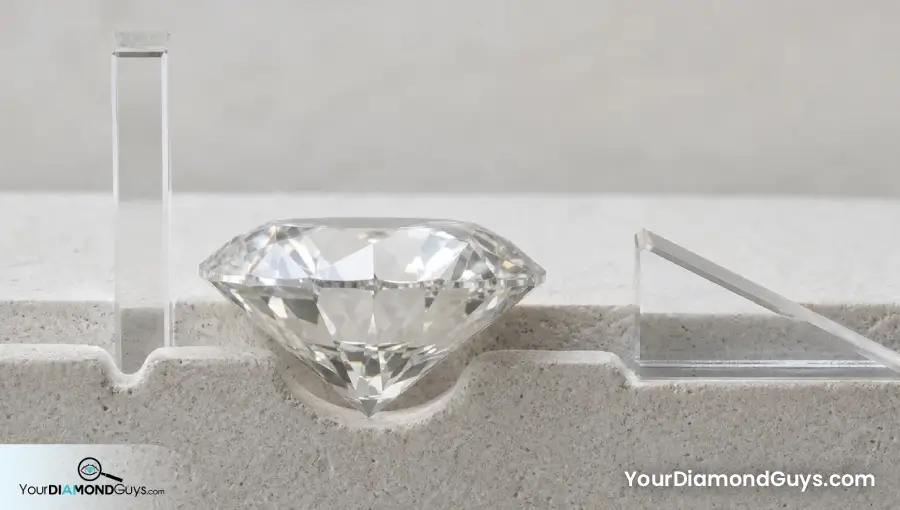
Crown angle measures slope. Crown height measures vertical height. Table size, star length, girdle position, and facet geometry connect the two, so one value cannot perfectly predict the other.
A smaller table generally leaves room for a taller crown at the same angle. A larger table can lower crown height. That is why table percentage belongs in the same review.
Read the GIA proportion diagram instead of trusting a seller's label. The rounded angle and height values are designed for screening, while video shows the result.
The Round Crown Zone I Prefer
A 34 to 35 degree crown angle is the clean starting area for the round brilliants I like. Pair it with a 40.6 to 41 degree pavilion angle, 56 to 58 percent table, and 60 to 62.4 percent total depth.
Crown and pavilion trade against each other. Near 35 degrees, I want the pavilion closer to 40.6 to 40.8. Near 34 degrees, a 40.8 to 41 pavilion can still make sense. Scope images and video settle the close calls.
| Crown signal | What it can change | Buyer response |
|---|---|---|
| Below about 33 degrees | Flatter crown and reduced fire potential | Check table, pavilion, leakage, and pattern |
| 34 to 35 degrees | Clean YDG round search zone | Match the pavilion and verify images |
| 35.5 to 36 degrees | Higher crown and steeper combination risk | Prefer a shallower pavilion and strong proof |
| Above 36 degrees | More height and spread tradeoff | Review weight ratio, darkness, and fire balance |
How The Crown Changes Fire And Spread
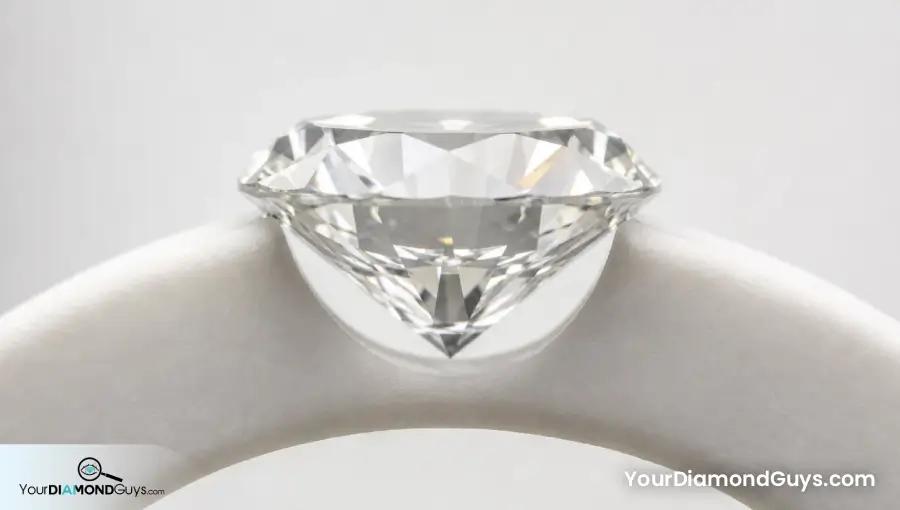
The crown refracts returning light and separates some of it into spectral colors. More crown height and the right facet angles can create larger fire events. That does not mean every tall crown looks fiery in every room.
A taller crown uses vertical space and rough weight. The diamond can lose diameter if the entire build becomes deep. Compare the crown with total depth and actual millimeter spread.
Jewelry store spotlights can make a weak combination flash. I want diffused office light, normal room light, and movement. Fire needs to appear without a ceiling full of tiny spotlights doing all the work.
Fancy Shape Crowns Need Video
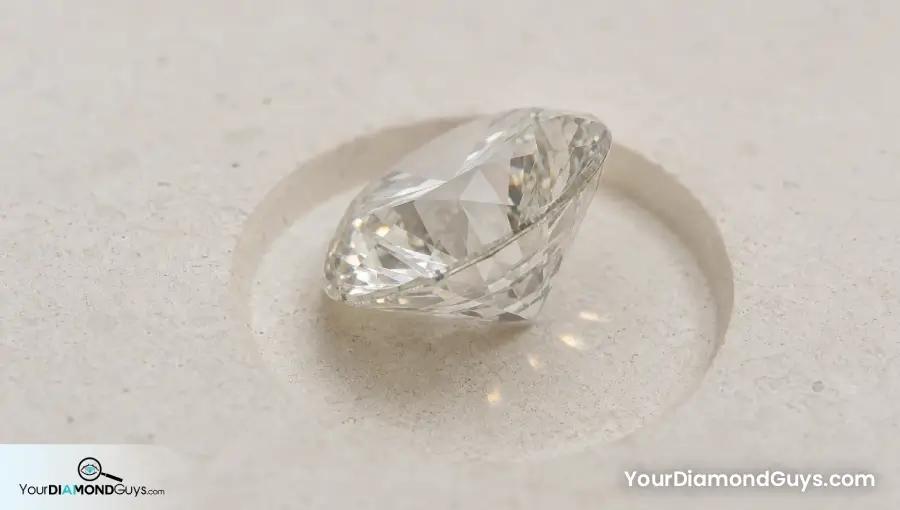
GIA reports do not provide the same complete crown angle decision for every fancy shape. Even when a seller lists scan data, the varying facet arrangements make direct round style thresholds unreliable.
A cushion with chunky mains, a radiant with mixed faceting, and an emerald cut with broad steps use the crown differently. The crown still affects height, fire, and pattern, but video and light images carry more weight than a borrowed round range.
Use shape specific guides and the fancy shape limits page before turning scan data into a pass or fail rule.
How I Pair The Crown And Pavilion
I never approve a round from crown angle alone. I pair crown with pavilion, table, depth, star and lower half pattern, finish, and actual images.
When the crown sits outside my preferred zone, the diamond needs a reason to stay. Exceptional scope images, strong spread, or a deliberate antique look can be reasons. A seller calling it ideal is not one.
A Crown Angle Pair Example
Round A has a 35.5 degree crown and 41.2 degree pavilion. Round B has a 34.5 degree crown and 40.8 degree pavilion. Both have 57 percent tables and GIA Excellent cut.
Round B gets my first look because the angle pair sits in a cleaner balance. Round A can still flash under spotlights, but I expect more leakage or darkness risk and require scope proof.
Mistakes I Would Avoid
- Chasing a high crown because fire sounds better.
- Rejecting a low crown without checking the pavilion and table.
- Confusing crown height percentage with crown angle degrees.
- Ignoring diameter loss in a tall overall build.
- Applying round crown thresholds to every fancy shape.
Questions To Ask Before Buying
- What are the crown angle and crown height on the GIA report?
- How does the crown pair with the pavilion angle?
- Does the table size leave a balanced crown area?
- Does the diamond show fire in ordinary light?
- Do scope images show leakage or uneven contrast?
Where To Compare The Proof
Affiliate disclosure: Your Diamond Guys can earn a small commission if you buy through a partner link. It does not change what you pay or which diamond we recommend.
Use Whiteflash and Brian Gavin Diamonds to study how crown and pavilion combinations look beside actual performance images. The educational value is in matching the numbers to the pattern.
The Crown Pair I Would Choose
Start round crown angles at 34 to 35 degrees. Pair them intelligently with the pavilion instead of treating the range as a standalone badge.
The crown should add fire without creating a heavy, dark, or small looking stone. Make the video prove that balance.
If you want another set of eyes on the stone, book your free consultation with Your Diamond Guys.
Keep Building The Angle Pair
The crown only makes sense beside the rest of the diamond. Use the broader crown and pavilion angle guide for the combined cut relationship, then compare the pavilion angle, table and crown pairing, and two depth measurements.
Use the complete diamond proportions hub to connect the crown with table, pavilion, total depth, spread, and light performance.
Diamond Cut, Proportions, and Crown Height: What a Pro Sees First
Questions? Reach out directly for a free consultation, or drop them in the Diamond Buyers Academy community — Rob and Josh answer personally.
Questions Buyers Ask Us
*Some links on our site may earn us a small commission at NO EXTRA cost to you, helping us keep our content free*