Total Depth Versus Pavilion Depth In Diamonds

By Josh Allen, Co-Founder of YourDiamondGuys.com. Fifth generation diamantaire with 30+ years in the global diamond trade. Former supplier to Tiffany & Co., Cartier, and Harry Winston.
How we evaluate proportions: We identify which GIA field is being quoted, calculate each percentage from the correct start and end points, then compare the numbers with the side profile. Mixing the fields ruins the comparison.
Total depth near 61 percent and pavilion depth near 43 percent can describe the same round. One is not wrong. They measure different sections.
This mix up shows up in spreadsheets, retailer filters, and buyer emails all the time. Once the columns get crossed, good stones look impossible and bad comparisons look scientific.
The fix takes thirty seconds. Know the start and end points of each measurement.
For natural diamonds, start with GIA. GIA separates total depth from pavilion depth in diamond anatomy, so the two percentages should never be swapped in a comparison sheet.
The Short Answer
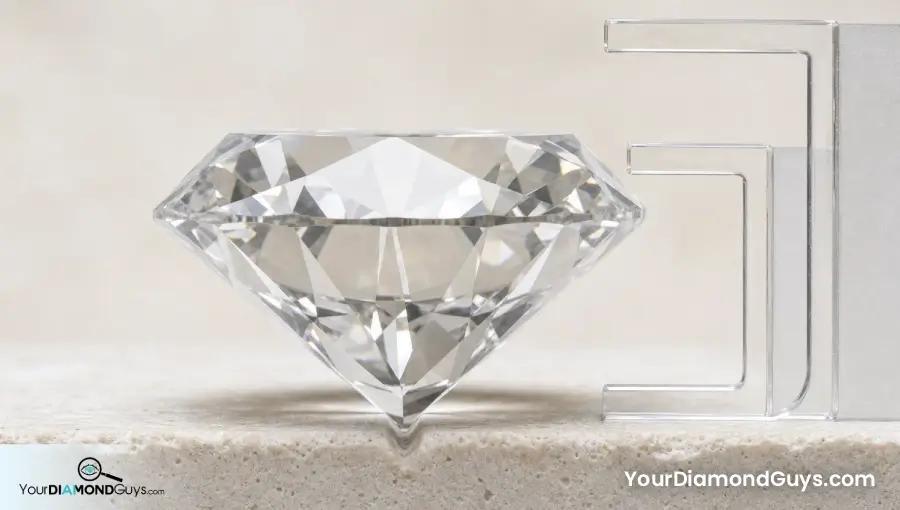
Total depth measures table to culet height as a percentage of average diameter. Pavilion depth measures girdle to culet height as a percentage of average diameter.
Total depth includes crown height, girdle thickness, and pavilion depth. Use total depth for spread and weight distribution. Use pavilion depth with pavilion angle to understand the lower half and its light return risk.
The Two Formulas Side By Side
Both round calculations use average girdle diameter as the denominator. The numerator changes.
For fancy shapes, listings commonly divide total depth by width. Detailed pavilion percentage data is less consistent and cannot carry a universal round style interpretation.
| Field | Measurement path | Primary buyer use |
|---|---|---|
| Total depth percentage | Table to culet | Spread, weight distribution, and overall build |
| Pavilion depth percentage | Girdle to culet | Lower section geometry and light behavior |
| Crown height percentage | Girdle to table | Upper section height and fire context |
| Girdle thickness | Edge between crown and pavilion | Durability and hidden weight context |
Why The Numbers Do Not Add Perfectly
Crown height plus pavilion depth plus girdle thickness roughly describes total depth, but rounded report values and the way girdle thickness is measured prevent a perfect simple sum.
Do not call a report inconsistent because the displayed percentages miss by a few tenths. Use the actual millimeter depth and proportion diagram when a discrepancy matters.
The crown guide, pavilion guide, and girdle guide explain each component separately.
This separation becomes valuable when two rounds share 61.8 percent total depth. One can reach that total through a taller crown and balanced pavilion. Another can reach it through a thicker girdle and deeper pavilion. The same total hides two different builds.
Which Field Answers Which Buyer Question
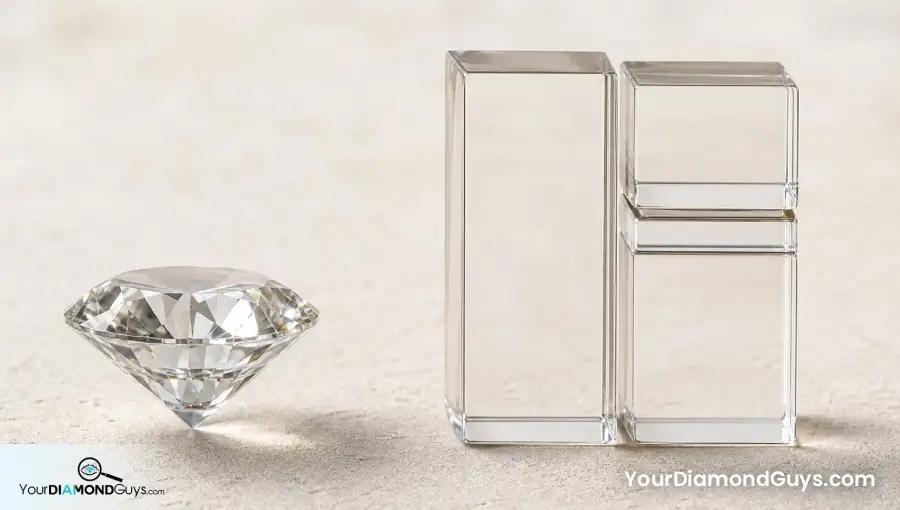
Ask total depth when the diamond looks small for its weight. High total depth can point to a tall crown, steep pavilion, thick girdle, or a combination.
Ask pavilion depth and angle when the center looks dark, pale, or leaky. Those values tell you more about the lower facet geometry that redirects light.
Ask crown height and angle when you are judging fire, flatness, and the balance above the girdle. The fields form one proportion story, not competing definitions.
A Quick Report Sanity Check
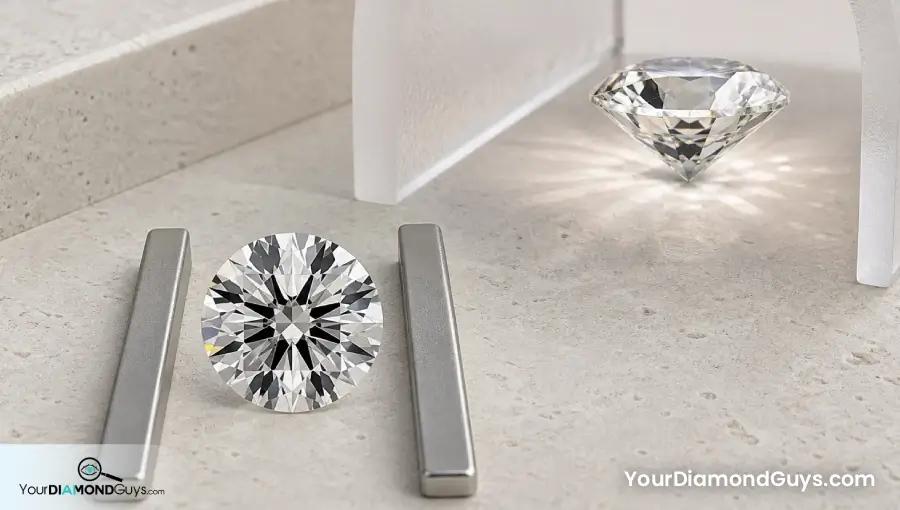
A modern round with about 61.5 percent total depth, about 43 percent pavilion depth, and about 15 percent crown height sits in a plausible relationship. That does not approve the stone, but the columns make sense.
A spreadsheet showing 61.5 percent pavilion depth has almost certainly mislabeled total depth. Stop the comparison and correct the source data before ranking anything.
The report only red flags checklist gives you the next triage step after the labels are clean.
When a seller shows only one depth field, ask which one it is before saving the number. A screenshot without the full proportion diagram is not enough context for a cut comparison.
How I Separate The Two Depths
I label each exported column with the full term and unit. Total Depth Percent, Pavilion Depth Percent, Pavilion Angle Degrees. That prevents a number from traveling without context.
Then I use total depth for spread screening and the pavilion pair for optical screening. The video decides whether either warning became a visible problem.
A Total And Pavilion Depth Example
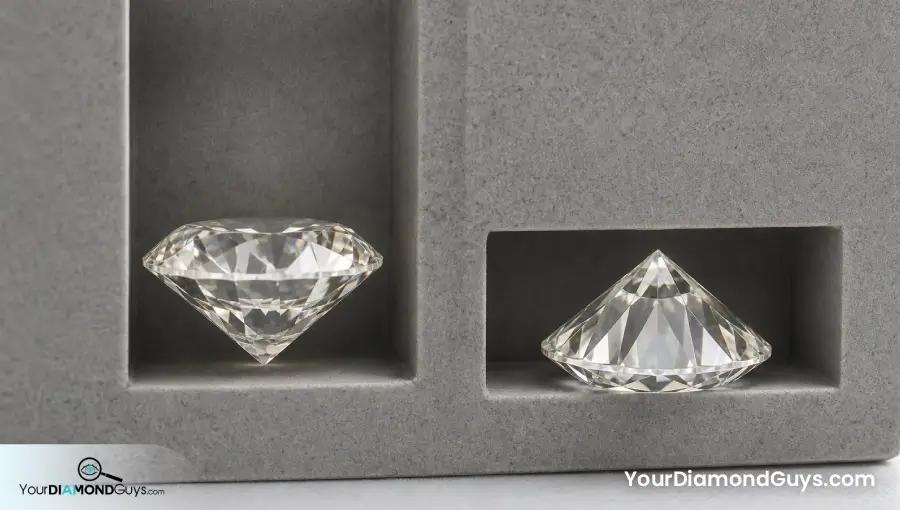
A report lists 61.8 percent total depth and 43.0 percent pavilion depth. A retailer export labels the 61.8 value Pavilion Depth.
The export is wrong. A buyer using it could reject every normal round in the file. Checking the GIA proportion diagram restores the correct fields before any cut decision is made.
Mistakes I Would Avoid
- Using total depth and pavilion depth as interchangeable names.
- Comparing a percentage with an angle in degrees.
- Expecting rounded crown, girdle, and pavilion values to sum perfectly.
- Trusting a retailer export over the GIA report.
- Using total depth alone to diagnose leakage.
Questions To Ask Before Buying
- Does this column show total depth or pavilion depth?
- Is the value a percentage or an angle in degrees?
- Does the retailer data match the GIA report diagram?
- Does total depth explain a small face up measurement?
- Do pavilion angle and video support strong light return?
Where To Compare The Proof
Affiliate disclosure: Your Diamond Guys can earn a small commission if you buy through a partner link. It does not change what you pay or which diamond we recommend.
Open the report diagrams behind listings on Blue Nile and Ritani and compare them with the filter labels. The exercise makes total depth, pavilion depth, and pavilion angle easy to keep straight.
The Depth Number I Would Use
Use the full field name every time. Total depth tracks the whole height. Pavilion depth tracks only the lower section.
When retailer data conflicts with the report, trust the GIA report and correct the comparison before you make a buying call. Clean labels prevent confident mistakes.
If you want another set of eyes on the stone, book your free consultation with Your Diamond Guys.
Use The Right Depth For The Question
Use the broader depth percentage guide for hidden weight and the crown and pavilion guide for light return. Then return to the millimeter measurements and the pavilion depth and angle explanation.
The diamond proportions and measurements guide shows where both depth fields fit beside crown, girdle, spread, and light return.
Discover the Secrets of the Round Brilliant Cut Diamond
Questions? Reach out directly for a free consultation, or drop them in the Diamond Buyers Academy community — Rob and Josh answer personally.
Questions Buyers Ask Us
*Some links on our site may earn us a small commission at NO EXTRA cost to you, helping us keep our content free*