Blue Nile’s strengths
- Broad diamond selection and useful search filters.
- Separate setting choices for building your ring.
- Close images that help you ask specific questions.
- Price matching and an inspection window for eligible purchases.
Blue Nile buyer review
Yes, Blue Nile is worth considering when you want plenty of stones to compare. The choice is its strength. This review shows how I would narrow it down, use the chat and price the finished ring.
Book your free consultationYour consultation is free. Retailers can pay us a commission on qualifying referrals at no extra cost to you. Read how referrals work.
Is Blue Nile worth it?
Blue Nile gives you room to shop around within one store. We liked saving stones, comparing listings and choosing the setting separately. The grade below covers that shopping experience. It does not approve every diamond in the catalog.
Diamond selection and quality
Set your budget before opening the Diamond Finder. It separates natural and lab grown stones and filters by shape, price, carat, color, clarity and cut. The advanced controls help you narrow the field once you know what you want.
Pick the origin and shape first. Reserve money for the setting. Use the remaining budget to save three serious diamond choices. Twenty tabs will not make this easier.
For natural diamonds, start with a GIA report. Check its number against the listing and keep the stock number with it. The report identifies and grades the diamond. The stock number helps Blue Nile’s support team find it.
Do not spend the whole budget chasing Flawless. Use the clarity filter to narrow your choices, then look at the inclusions and where they sit.
Swipe the chart to see all 11 grades.
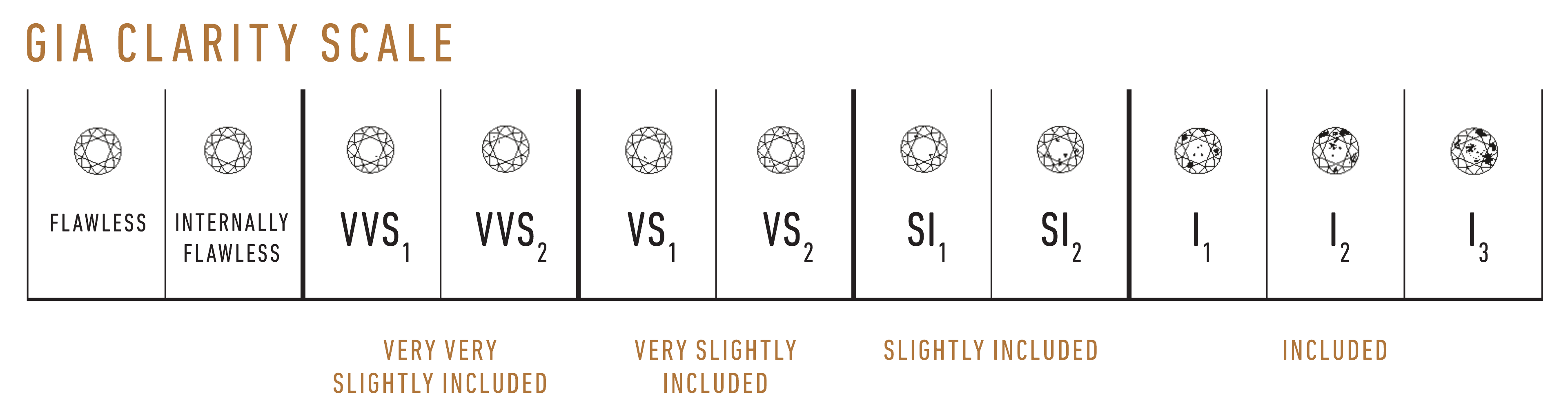
GIA uses these 11 clarity grades at 10x magnification. Blue Nile’s current filter shows SI2 through FL, part of this full scale. Use the labels to narrow your search, then check whether an inclusion is visible in the diamond you like.
GIA educational example, separate from Blue Nile inventory. GIA source
Be careful with a cut label on an oval, pear or emerald cut listing. GIA’s overall cut grade applies to standard round brilliants, not those fancy shapes. Ask who assigned a retailer’s cut label and what it measures. Do not read “Ideal” on a search result as a GIA cut grade for an oval.
Comparing saved diamonds
The saved comparison helped us spot differences between listings. It could not tell us which oval looked better or whether an inclusion would bother us. Use the grid to decide what to investigate.
| What you are comparing | What to look for |
|---|---|
| Price | Compare natural with natural or lab grown with lab grown, and keep the shape the same. Check the report, measurements and how the diamonds look before choosing the lower price. |
| Size | Read the millimeters, not just the carat weight. Look at the outline and width you will actually see in the ring. |
| Appearance | Watch the available videos. Compare broad flashes, busier reflections and any dark area that stays prominent as the diamond moves. |
| Clarity | Locate the feature in the actual image and report. Ask whether it affects visibility or condition. Two diamonds with the same clarity grade can raise different questions. |
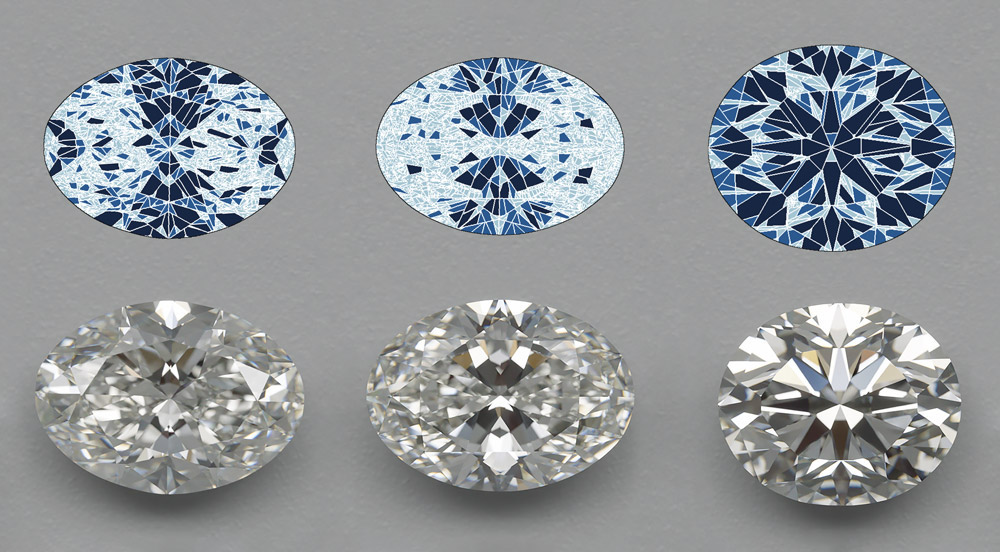
GIA’s Figure 12 shows three attractive oval patterns. The lower row moves from busier reflections on the left to broader reflections on the right. The maps above show the facet patterns. Use these to name the look you prefer. They do not rank the stones or establish matching grades, weights or prices.
GIA research illustration, Gems & Gemology, Fall 2024, Figure 12. Separate from Blue Nile inventory. GIA source
Look at the three ovals above. Which pattern do you prefer? Ask for similar views of your saved Blue Nile stones so you can make that comparison for yourself.
Still stuck between two? Use our diamond comparison service. Send both listings and tell us what is making the choice difficult.
Images and customer service
Zoom is useful for finding a mark. It also makes that mark fill your screen. Once you locate it, ask how it looks without magnification. That is the view you will live with.
Our chat experience gave us a useful answer about color. We deliberately chose a diamond with a brown tint and asked about it. The representative pointed us toward colorless stones instead of pushing the sale. I liked that. We also had to give the representative the stock number so she could pull up the diamond.
Send the stock number, listing link and a marked screenshot. “Can you see this crystal without magnification?” gives the representative something specific to answer.
Then ask whether the answer comes from an inspection of the stone or the online images. Both can help, but they are different kinds of information. Do not assume the person in chat has the diamond in front of them.
If the report includes a clarity plot, use it to put a location in the question. Read the key and comments too. For a bruise, chip, cavity, knot, etched channel or indented natural, ask about condition and durability, not just whether a prong can cover it.
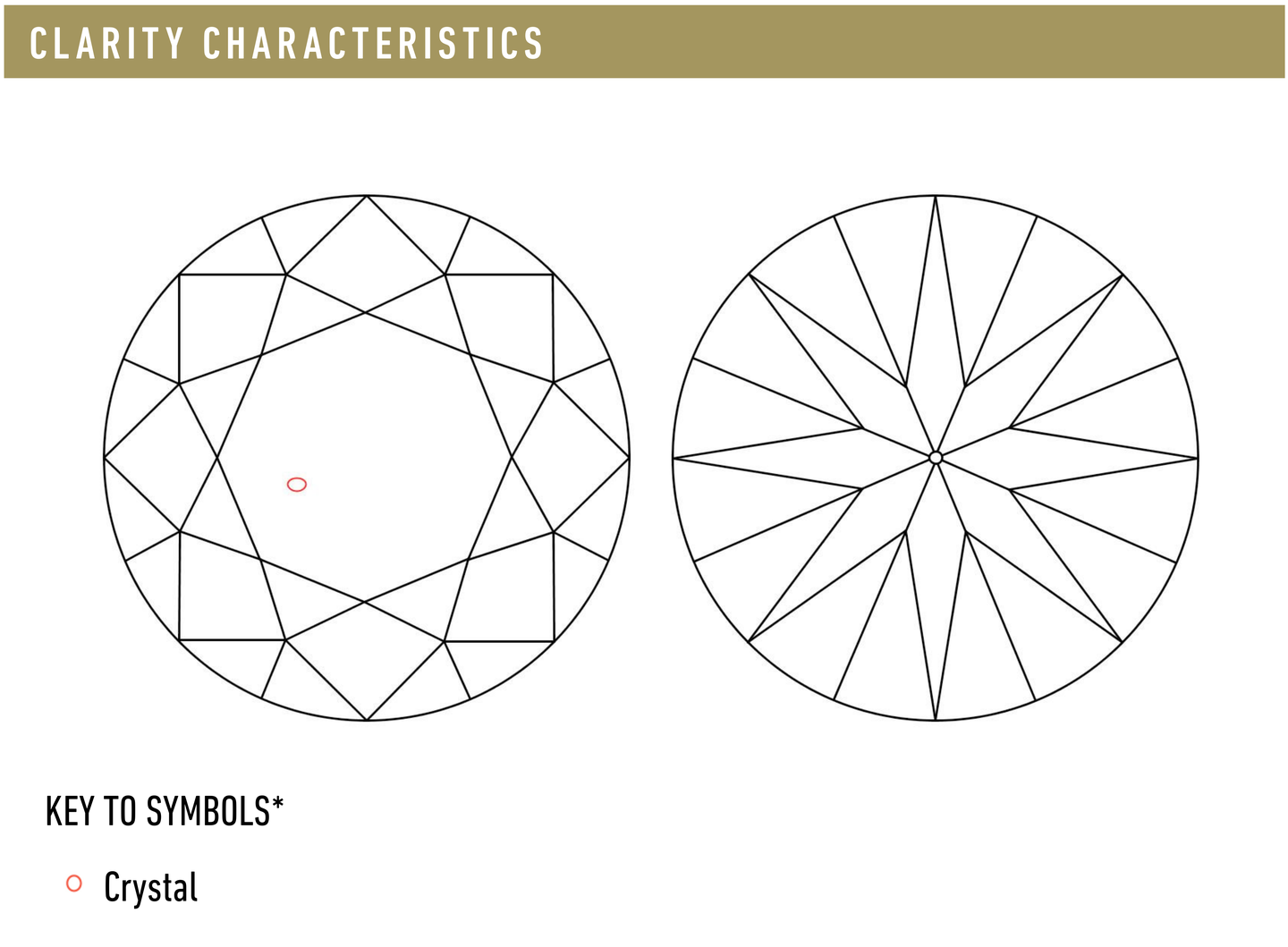
The red circle in the left crown view marks a crystal in this GIA sample. The right diagram is the pavilion view. Use your own diamond’s key and plot to locate a question for Blue Nile support. A plot is an approximate map, not proof of visibility. Some report formats omit it.
GIA natural diamond sample report 2231120907, labeled SAMPLE in the complete report. GIA source
Prices and value
A competitive diamond price is only part of the bill. Blue Nile’s setting catalog labels setting prices separately. Choose the metal, design and ring size before comparing the total. A solitaire and a detailed pavé setting can turn the same diamond into very different purchases.
I would not call Blue Nile the cheapest without comparing the diamonds you are considering. Keep natural and lab grown separate, then match shape, grades and measurements. Add the setting, tax and any delivery or service charges. Compare what you will pay for the ring you want.
Its Diamond Price Match Guarantee covers qualifying colorless loose diamonds with GIA grading and matching characteristics. The competing offer must be public and active. Approval is discretionary, and an approved price lasts 48 hours. Read the price match conditions and ask before purchasing; this is not an automatic discount on every ring.
Want to try the setting first? Blue Nile’s showrooms give you a way to check comfort, width and height. Send the setting reference before you go. Ask separately whether your exact online diamond can be available for the appointment.
Returns, resizing and upgrades
The inspection window is useful. The exclusions matter just as much. Check the eligibility of your exact order before adding engraving, commissioning custom work or arranging a resize.
| Policy | What Blue Nile publishes | What I would do |
|---|---|---|
| Returns | 30 days from shipment for eligible items in original, unworn condition, with packaging and the supplied paperwork. Return authorization is required. Two complimentary returns per customer per year. | Plan your inspection for arrival, not the end of the window. |
| Return exclusions | Personalized or engraved jewelry, custom orders, items resized after purchase, upgrade purchases, clearance and final sale items are excluded. | Settle the keep or return decision before alterations. |
| Resizing | One free resize within the first year on eligible rings, normally within two sizes. Design and metal restrictions apply. | Confirm the design’s eligibility and the effect on returns. |
| Diamond upgrades | Credit toward a diamond costing at least twice the original price, subject to eligibility, condition, original report and approval. The program applies to U.S. shipments; other countries require individual confirmation. | Keep the report and invoice. Budget for the extra purchase. |
For this purchase, I would put more weight on having time to inspect the ring than on an upgrade you have not planned. International buyers should confirm local return shipping and program eligibility directly.
Astor and other collections
For an Astor diamond, ask for its reports and images. If it comes with extra testing, what did that test measure? Compare it with a standard Blue Nile diamond you also like. Before paying more, I want to know what I am getting for the difference.
A grading report records the diamond’s grades. An extra light performance test answers a different question. For a natural diamond, start with GIA and look at the stone. Read the additional test for what it tells you, rather than treating the collection name as the answer.
James Allen now sits within Blue Nile’s shopping offer. The James Allen FAQ describes it as an exclusive collection. Treat it as another collection to compare, rather than a second independent shopping destination. Our James Allen review covers the designs and owner support.
Our buying recommendation
By this point, I would want two finalists and one clear reason to choose the winner. Perhaps you prefer its oval pattern. Perhaps it leaves room for the setting you want. A low price is useful when the stone also makes you happy.
I would keep looking if the photos leave a major question unanswered, the collection premium has no clear benefit, or your planned alterations remove a return option you need. Those are reasons to pause, even when the price looks tempting.
If you mainly want a tightly selected precision cut round, compare the approach in our Whiteflash review and Brian Gavin review. If the ring design drives the choice, our Brilliant Earth review focuses on setting selection and the complete quote.
Browse Blue Nile’s selection. If you want help choosing, send us the listings. We can work through the differences with you.
Buyer questions
Yes, if you enjoy comparing options. Save a few stones and use the chat to clear up questions. I would move on if the photos or answers leave an important concern unresolved.
Judge the diamond, not the entire catalog. For a natural stone, start with its GIA report and inspect the available images. A high clarity grade or a retailer’s cut label does not tell you everything about how it looks.
Check the diamonds you want to buy. I would not assume Blue Nile has the lowest price. Keep natural and lab grown separate, compare the same shape, measurements and grades, then add the setting and other costs. Ask whether the loose diamond qualifies for price matching.
I would pay extra only for a benefit I can explain. Ask what Astor’s extra testing measures, then put it beside a standard diamond you would happily buy.
Eligible items have a 30 day return window from shipment. Keep the ring unworn and retain its packaging and paperwork. Engraving, custom work, resizing after purchase and other exclusions change that answer. Confirm your order’s eligibility before making alterations.
An eligible diamond receives credit toward a replacement costing at least twice its original price. Condition, the original report and approval matter. Confirm the rules for your country and diamond before relying on the benefit. It requires another purchase, not a cash refund.
What this review covers
The grade covers selection, ease of use, customer service, price and shopping tools. When you send us a diamond, we check its report and images, discuss anything that concerns you and look at the complete quote.
Retailer referrals can pay us a commission at no extra cost to you. That helps keep the consultation free. Read our referral disclosure and diamond review method to see how it works.