Do Lab Diamonds Pass a Diamond Tester?
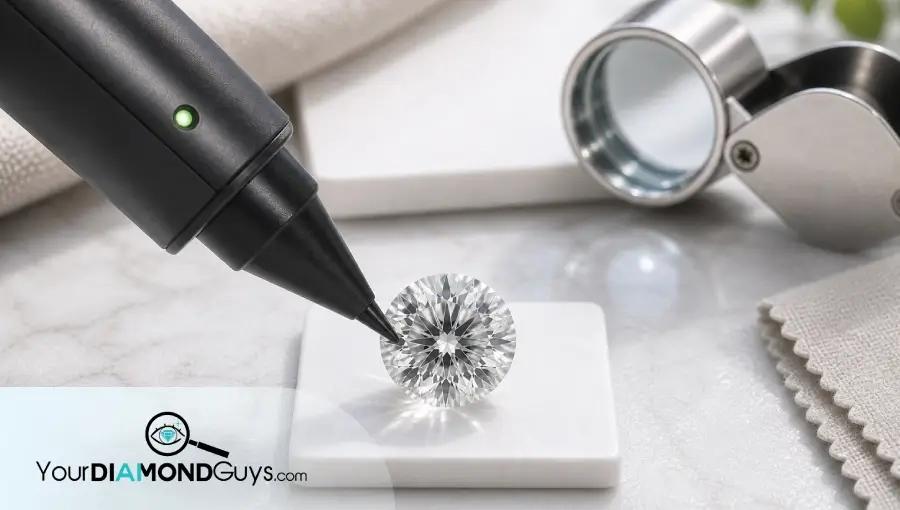
Use the tester as a clue. Use the report as protection.
By Josh Allen, Co-Founder of YourDiamondGuys.com. Fifth generation diamantaire with 25 years of experience in the global diamond trade. Former supplier to Tiffany & Co., Cartier, and Harry Winston.
Yes, many real lab diamonds pass standard diamond testers, but that does not prove the diamond is natural.
That is the whole point.
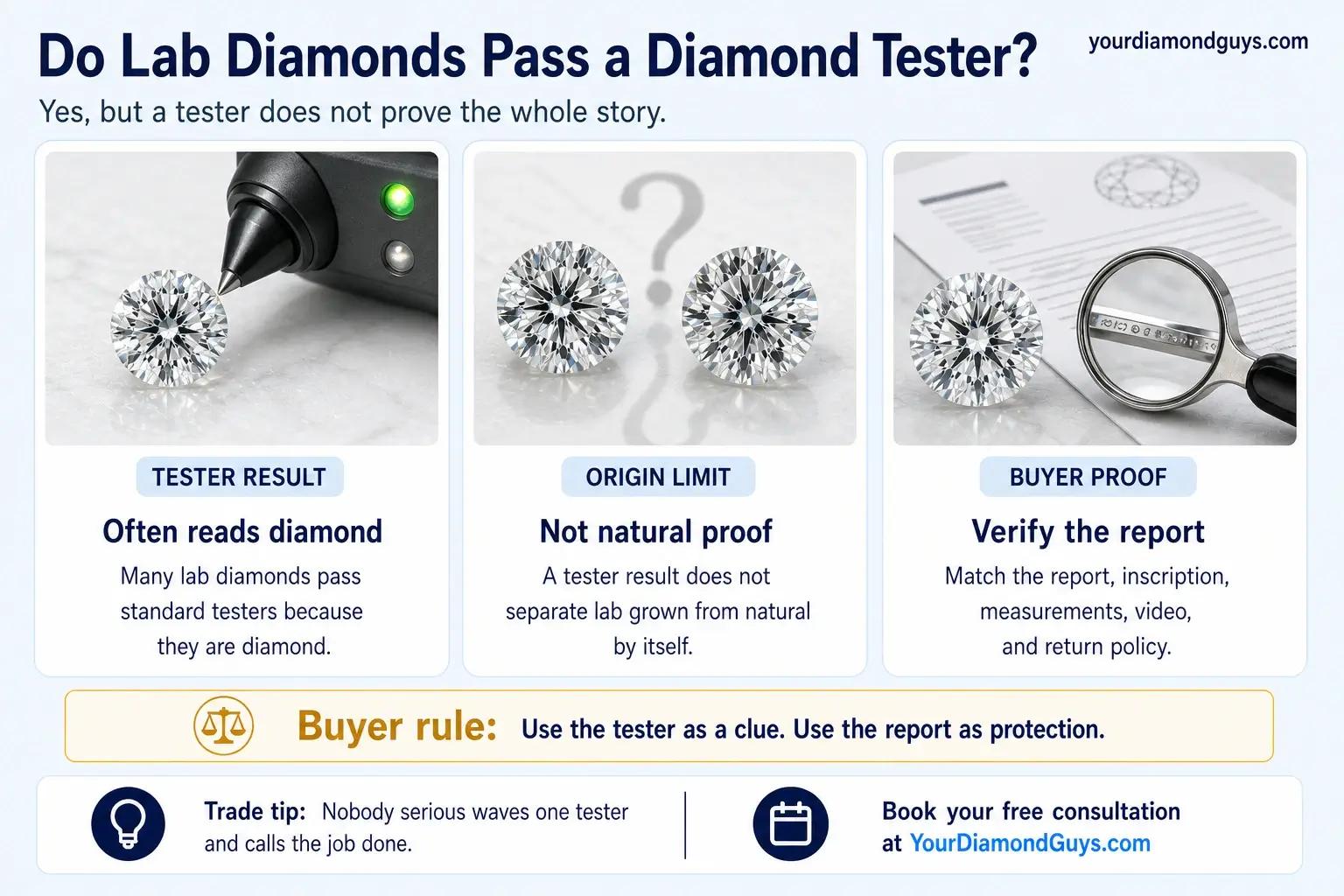
A tester can help separate diamond from many lookalikes. It cannot replace a grading report, inscription match, or proper lab grown verification.
What A Diamond Tester Checks
Most standard testers check properties such as heat or electrical behavior.
That helps identify diamond like material.
It does not answer every origin question.
A lab grown diamond is still diamond, so a basic tester often reads it as diamond. That is exactly why a tester alone does not separate lab grown from natural.
What A Tester Can Prove
It can help answer a narrow question.
Is this likely diamond instead of many common simulants?
That is useful.
It is not complete.
Moissanite, tester type, calibration, metal contact, and user error can complicate results. A tester is a tool, not a final judgment.
What A Tester Cannot Prove
| Question | Tester Answer |
|---|---|
| Is this diamond material? | Often helpful |
| Is this natural or lab grown? | Not enough |
| Does it match the report? | No |
| Is it well cut? | No |
| Is it fairly priced? | No |
| Is it free from tint or haze? | No |
That table saves a lot of confusion.
The tester is not the purchase decision.
How To Verify A Lab Diamond Correctly
Use the report and inscription.
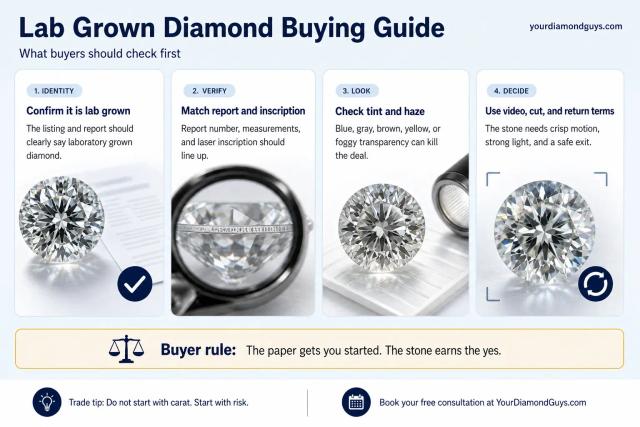
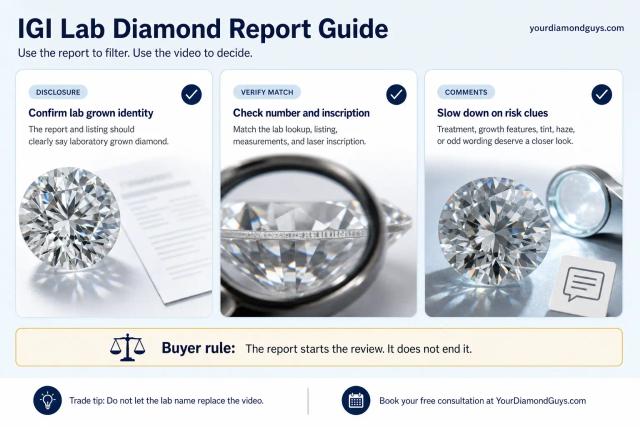
Start with the listing. Confirm it says lab grown diamond. Then check the report number, lab grown disclosure, measurements, comments, and laser inscription.
After delivery, match the inscription and measurements to the report.
The laser inscription verification guide gives you the step by step version.
Do Not Confuse Real With Natural
This is where buyers get crossed up.
Lab grown diamonds are real diamonds. They are not natural diamonds.
A standard tester can support the real diamond part. It does not prove the natural diamond part.
If you need the basic identity breakdown, read are lab grown diamonds real.
When To Use A Jeweler Or Appraiser
Use a jeweler or appraiser when the purchase is expensive, the report language is unclear, or the stone arrives and something feels off.
Ask them to confirm the inscription, measurements, and report match. If origin screening matters, ask whether they have the right equipment or whether the stone needs advanced testing.
Do this during the return window.
Trade Insider Moment
In the trade, nobody serious waves one tester and calls the job done.
You match documents. You inspect the stone. You check the details that actually protect the deal.
That is the difference between a trick and a process.
My Buyer Recommendation
Use a diamond tester as a quick clue.
Then use the report, inscription, video, and return policy as the real buying protection.
If a seller acts like a tester result replaces the report, slow down.
What To Ask Before Buying
- Is there a grading report?
- Does the report say laboratory grown diamond?
- Can I verify the report number?
- Is the stone laser inscribed?
- Can a jeweler confirm the inscription after delivery?
- What does the return policy allow if something does not match?
Book your free consultation if you want help checking whether the proof is enough.
Where I Would Compare Verification Steps
Use these sites as comparison tools, not automatic recommendations. For live listing comparison, I would check similar lab diamonds on Ritani and Blue Nile, then judge the report, video, tint, and return terms before the price gets the final vote.
Are Lab Diamonds Worth It?
Questions? Reach out directly for a free consultation, or drop them in the Diamond Buyers Academy community — Rob and Josh answer personally.
Questions Buyers Ask Us
Related Lab Grown Diamond Guides
Keep the full buying path close. These are the next checks that usually affect this decision.
*Some links on our site may earn us a small commission at NO EXTRA cost to you, helping us keep our content free*