Why Lab Choice Changes Price
A diamond does not change when the paperwork changes.
By Josh Allen, Co-Founder of YourDiamondGuys.com. Fifth generation diamantaire with 30+ years in the global diamond trade. Former supplier to Tiffany & Co., Cartier, and Harry Winston.
A lower price from a softer lab is not automatically a bargain. Often, the market already priced the grading risk. The label says G VS2. The trade can price it closer to H SI1 because dealers do not assume every lab applies the boundary the same way.
That is why two reports with matching words can sit thousands of dollars apart.
GIA describes its report as technical information, not certification or appraisal, and its report limitations explain that examination results can differ based on when, how, and by whom an item is examined. The market prices that uncertainty.
Why does the grading lab change diamond price?
Lab choice changes price because buyers and dealers assign different confidence to the printed grades. A weaker market reference receives a discount for possible color, clarity, cut, and resale differences.
For natural diamonds, start with GIA. That keeps the quality and price comparison on one common scale.
The major grading lab comparison explains which reports serve different products and purposes. This page focuses on what happens to the money.
What do soft and strict grading really mean?
Soft grading means a market participant expects the printed grade to land lower if a stricter or more accepted lab examines the same stone. Strict grading means the lab applies tighter or more consistently trusted boundaries.
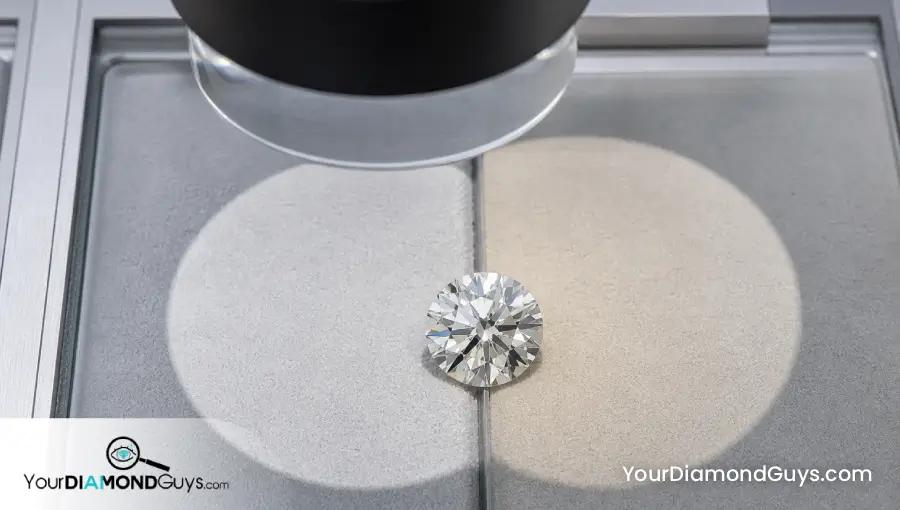
One round diamond straddling strict and broad grading observation fields.
The words are trade shorthand, not a claim that every report from one lab is wrong. Grading happens near boundaries. One stone can sit between G and H or between VS2 and SI1, and different observations can land on opposite sides.
The problem starts when a seller compares the softer printed grade directly with a GIA price. The stone can look discounted while still costing full money for its likely normalized quality.
| Listing situation | What the discount can reflect | Buyer response |
|---|---|---|
| GIA natural report | Market quality and price reference | Still inspect cut, clarity, and video |
| Other natural diamond report | Possible grade and resale uncertainty | Price against a conservative GIA outcome |
| Old or legacy report | Age, condition, and obsolete format | Verify identity and consider regrading |
| Lab grown report | Different product economics and formats | Compare within the current lab grown market |
How does one grade change the price?
Diamond pricing moves in steps. Color, clarity, carat thresholds, shape, cut, fluorescence, and market demand all interact. One grade difference does not create a fixed percentage change.
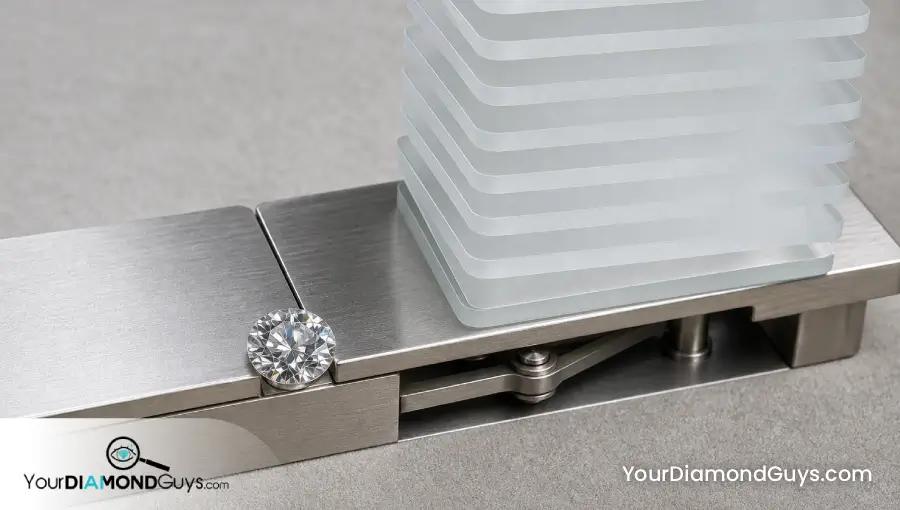
Large round diamond at a tiny grading detent linked to a tall value stack.
The effect grows with size and value. A one grade question on a small lab grown diamond can matter less than the shipping. A one grade question on a large natural diamond can change the deal by serious money.
Carat thresholds make the jump sharper. A report showing 1.00 carat cannot protect value if a verification or recut brings the stone to 0.98. Paper categories and physical reality must stay aligned.
Why does a softer report often look cheaper online?
Search filters compare the printed fields. A seller can list a non GIA G VS2 beside GIA G VS2 inventory even when the trade does not value them as the same quality.
The lower price attracts attention. Then the buyer believes the lab difference is a technical footnote. It is not. Lab choice sits inside the price, liquidity, trade in expectations, and future buyer confidence.
I have watched dealers buy these stones backward for decades. They estimate what GIA will call the diamond, subtract risk and expenses, then make the offer. Consumers should use the same logic before calling an offer a discount.
How do you normalize two different reports?
Do not invent a universal conversion chart. There is no honest rule that says every grade from Lab X equals one lower GIA grade.
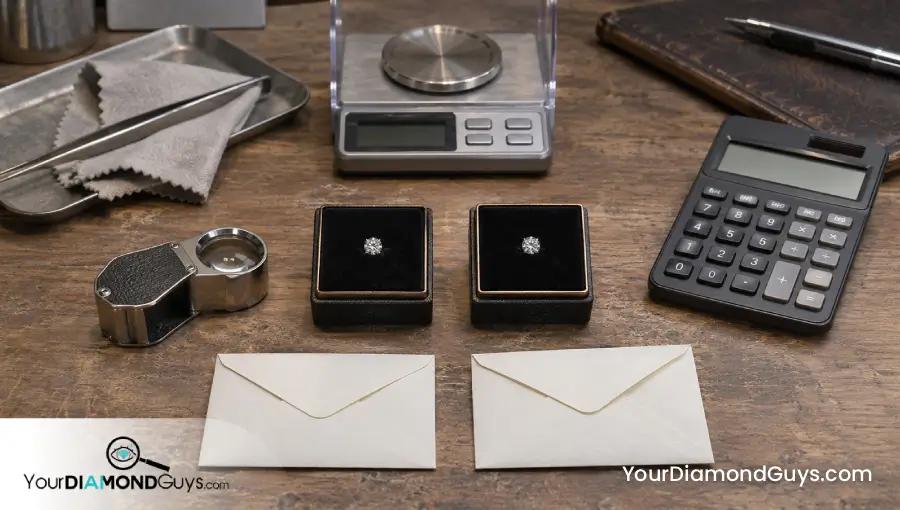
Two loose diamonds in separate cases beside a calculator and report envelopes.
Use a range. Price the non GIA natural diamond against the same printed grade, one color lower, one clarity lower, and a combination of both. Add report fees, shipping, insurance, setting removal, and the risk that the stone does not come back as hoped.
Then inspect the actual diamond. A beautiful stone can still be worth owning at the right normalized price. The grade change guide explains why a new submission does not promise the same result.
When is regrading worth the cost?
Regrading makes sense when the natural diamond’s value, saleability, insurance file, estate use, or purchase decision depends on a current trusted grade.
It makes less sense when fees and handling consume a large share of the stone’s value. Mounted stones also need setting removal for a full loose diamond report, which adds labor and damage risk.
Use the legacy report regrading guide to compare the expected value of better information with the cost of getting it.
How should lab risk change your offer?
Build the offer around the conservative outcome, not the seller’s best case. If the price only works when every printed grade survives GIA, the buyer holds all the downside.
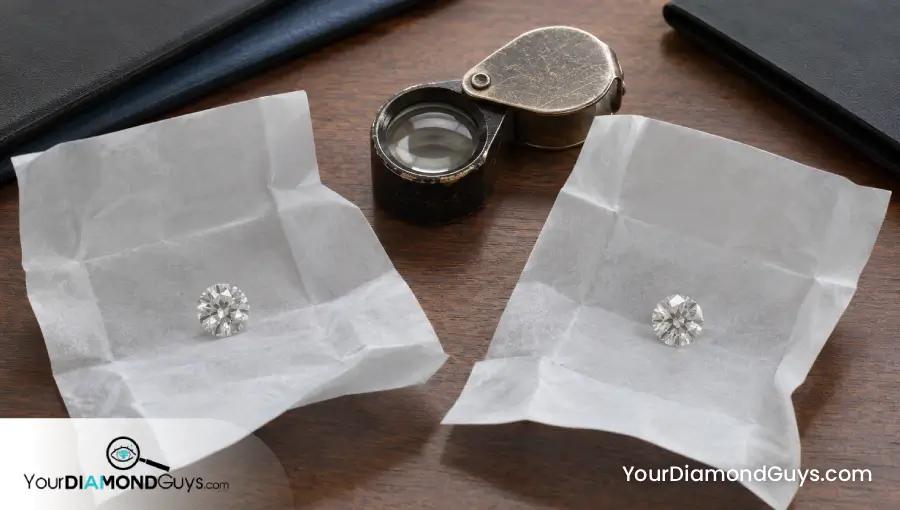
Two loose diamonds on separate gem papers beside a jeweler’s loupe.
A seller who believes the stone will receive the same GIA grades can submit it before the sale. That simple point clears a lot of smoke from the room.
Grade normalization in a real offer
A natural diamond carries a legacy F VS1 report and a $9,000 asking price. Comparable GIA F VS1 stones cost more, so the listing looks attractive.
Now compare GIA G VS2, G VS1, and F VS2 prices. Add the cost and risk of unsetting, shipping, grading, and resetting. If the asking price still makes sense across conservative outcomes, keep reviewing it.
If the deal only looks good as F VS1, ask the seller to obtain a current GIA report. Do not pay the optimistic grade and absorb the regrading risk yourself.
Pricing traps when the laboratories differ
- Comparing printed grades without comparing laboratories.
- Using a fixed one grade conversion rule.
- Ignoring report age and current diamond condition.
- Paying GIA money for non GIA uncertainty.
- Forgetting unsetting, shipping, grading, and resetting costs.
- Assuming an appraisal value normalizes a softer report.
Questions that expose the real grading risk
- Why was this natural diamond submitted to this laboratory?
- Will the seller make the sale contingent on a current GIA report?
- How does the price compare at one lower color or clarity grade?
- Who carries loss or damage risk during regrading?
- What is the return right if the grades change?
- Will a future buyer or insurer accept the current report?
My price protection rule
For natural diamonds, compare GIA with GIA. When another report enters the deal, price the conservative GIA outcome and make the seller prove any optimistic claim.
A lower price can be fair. It is only value when the discount is larger than the grading, liquidity, and condition risk you are accepting. The certified diamond guide explains why paper never guarantees the deal.
Stop Trusting Every Diamond Lab!
Questions? Reach out directly for a free consultation, or drop them in the Diamond Buyers Academy community — Rob and Josh answer personally.
What do buyers ask about lab choice and price?
← Browse all diamond grading guides
Want another set of eyes on the diamond?
Send the listing, grading report, price, and any video you have. We can look at the lab report, measurements, video, and price to make sure the evidence supports the price.
*Some links on our site may earn us a small commission at NO EXTRA cost to you, helping us keep our content free*