Diamond Depth Percentage, Spread Versus Performance
By Rob Cornfield, Co-Founder of YourDiamondGuys.com. 30+ years in the global diamond trade. Specialist in diamond cut and light performance.
How we evaluate proportions: We compare GIA depth percentage with face up millimeters, crown and pavilion data, and the moving light pattern. Depth can expose hidden weight, but the stone still has to stay bright.
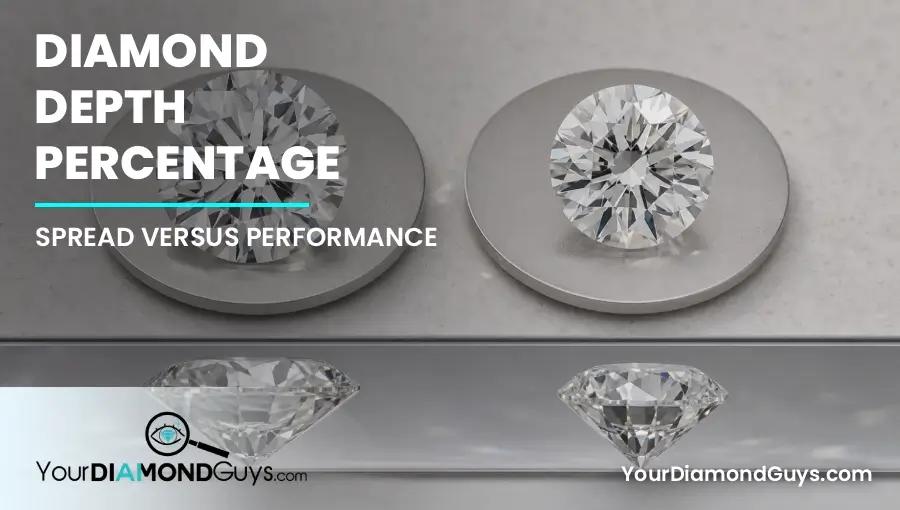
Here is the depth answer, diamond depth percentage shows how much of the width becomes vertical height, so excess depth can hide weight and shrink spread, but the number alone cannot predict light performance.
Deep does not always mean bad. Shallow does not always mean big value. Both shortcuts can put the wrong diamond on your hand.
Cutters know the carat thresholds. A little extra depth can save the 1.00 carat label while the diameter falls behind. The buyer pays for weight the eye cannot see.
For natural diamonds, start with GIA. GIA defines total depth as table to culet height divided by average girdle diameter, which gives the round calculation buyers need to understand before comparing spread.
The Short Answer
For a round, total depth percentage equals table to culet depth divided by average diameter, multiplied by 100. I use 60 to 62.4 percent as a clean search zone when the table, crown, pavilion, girdle, finish, and video agree.
Depth is a weight distribution clue. Too much often reduces face up diameter. Too little can create a broad stone with weak contrast or leakage. Fancy shapes need their own visual standard because one depth range cannot grade all outlines and facet arrangements.
Depth Explains Where The Weight Went
Carat measures mass. Depth helps show how much of that mass sits vertically. When two rounds weigh the same, the deeper one usually gives up some diameter.
The girdle and pavilion can hide weight too. That is why the girdle thickness guide and pavilion depth guide belong beside total depth, not in separate mental boxes.
Use the spread score method to compare the visible footprint with nearby stones. It turns the hidden weight question into a repeatable shortlist check.
Round Depth Ranges I Use For Triage
A natural round brilliant gets the cleanest start at GIA Excellent with Excellent polish and symmetry. Within that pool, I prefer 60 to 62.4 percent depth.
That range does not work alone. A 61.5 percent diamond can still have an angle combination I would reject. A 62.5 percent diamond can be worth viewing when diameter, girdle, and light proof stay strong.
| Round total depth | Common concern | What to check next |
|---|---|---|
| Under 59.5 percent | Very shallow build | Leakage, watery center, crown height, and girdle |
| 59.5 to 59.9 percent | Shallow edge of the search | Angle pairing and pattern |
| 60 to 62.4 percent | Clean YDG search zone | Diameter, table, crown, pavilion, and video |
| 62.5 to 63 percent | Spread can begin to tighten | Average diameter and hidden weight |
| Over 63 percent | Higher hidden weight risk | Price, diameter, girdle, and pavilion |
Depth And Light Performance Are Connected
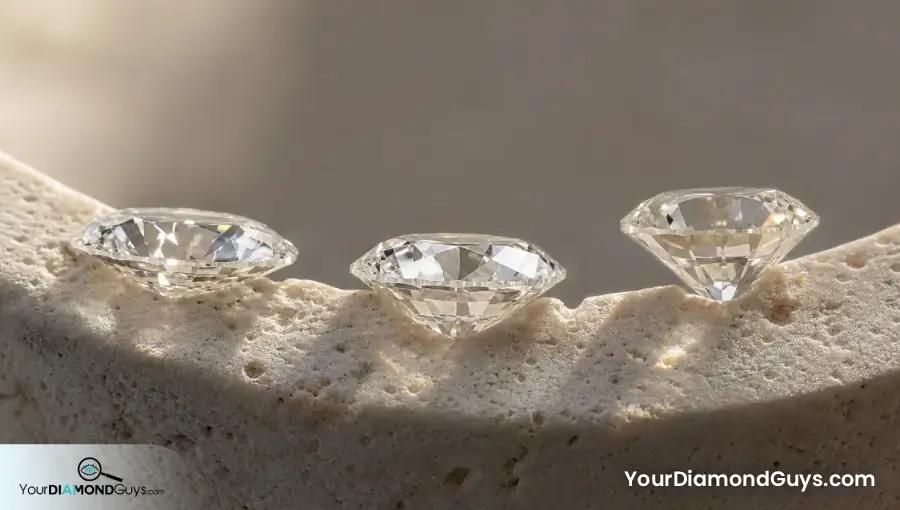
The pavilion occupies most of a diamond's vertical body. Make the pavilion too shallow or too steep and light can escape instead of returning through the crown.
Total depth cannot identify that problem by itself because crown height and girdle thickness contribute to the same total. Read total depth versus pavilion depth before you compare those two report fields.
A wide spread can look attractive in a listing grid. If the center goes pale, dark, or watery when the stone moves, the extra diameter did not create value.
Fancy Shape Depth Needs Context
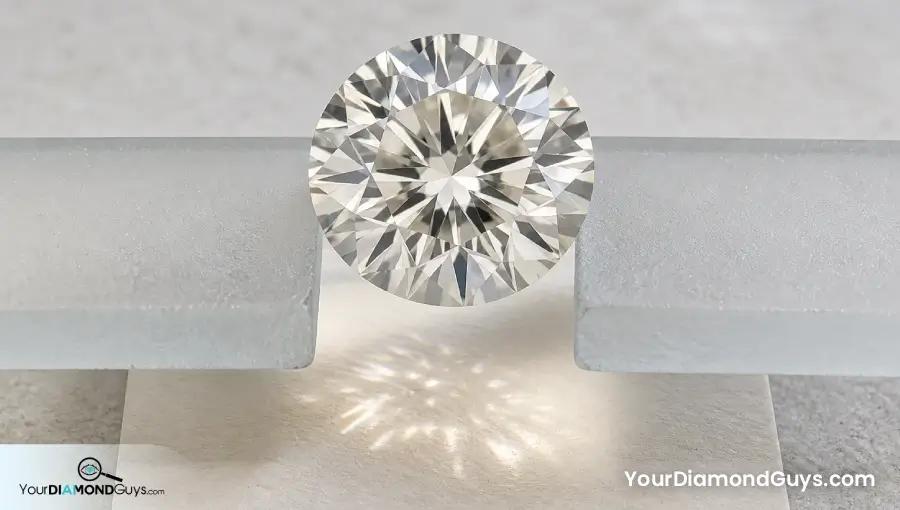
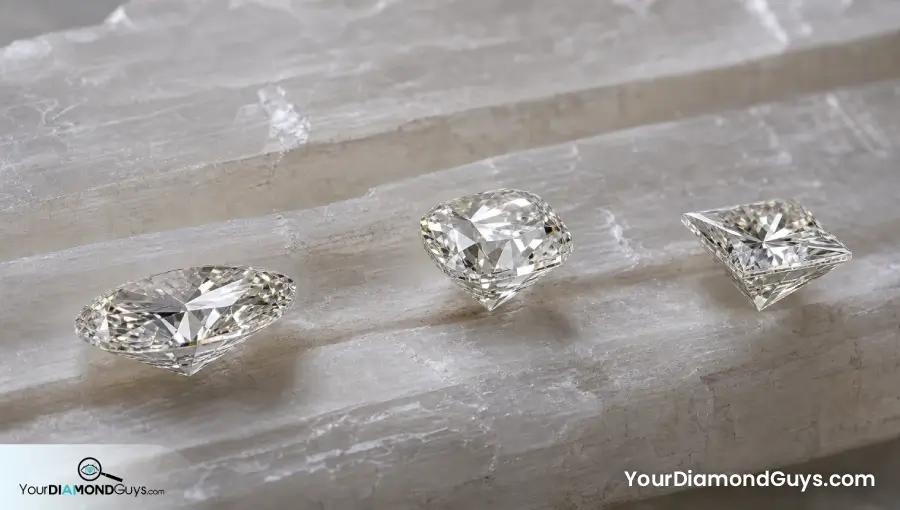
Fancy shapes use width as the denominator for depth percentage, but their outlines distribute area differently. A cushion often carries more depth than an oval. A princess needs a deep pavilion structure. An emerald cut can show a window even with a normal looking depth.
Do not transfer the round 60 to 62.4 percent preference to every fancy shape. Use shape specific starting zones, then judge spread, outline, pattern, and movement.
The oval proportions guide, emerald cut guide, and cushion guide show how the same depth conversation changes by shape.
How I Screen Depth In A Shortlist
I compare depth after shape, measurements, and carat. For rounds, I calculate average diameter and check the angle pair. For fancy shapes, I compare only similar ratios and facet styles.
A deeper stone stays in the shortlist only when it earns the weight through beauty, durability, or a shape specific pattern. It does not stay because the carat number sounds better.
A Hidden Weight Example
Round A weighs 1.00 carat, measures 6.24 mm on average, and has 63.2 percent depth. Round B weighs 0.96 carat, measures 6.34 mm, and has 61.4 percent depth.
Round B looks larger from the top. I still need its crown, pavilion, girdle, and video, but it starts with better weight distribution. Round A needs a meaningful price reason and exceptional proof to recover.
Mistakes I Would Avoid
- Rejecting every diamond above one depth cutoff.
- Rewarding shallow spread before checking leakage.
- Using total depth as a substitute for pavilion depth.
- Applying round depth ranges to fancy shapes.
- Ignoring diameter and girdle while chasing a carat threshold.
Questions To Ask Before Buying
- What is the total depth percentage on the GIA report?
- Does the diamond measure normally for its shape and weight?
- How much weight sits in the girdle and pavilion?
- Does the video show leakage, darkness, or a watery center?
- Would a slightly lighter diamond give me more visible spread?
Where To Compare The Proof
Affiliate disclosure: Your Diamond Guys can earn a small commission if you buy through a partner link. It does not change what you pay or which diamond we recommend.
Compare rounds with full cut data on Whiteflash and Brian Gavin Diamonds. Match carat neighborhoods, then compare diameter, total depth, angles, and performance images before price.
The Depth Tradeoff I Would Accept
Use 60 to 62.4 percent as the clean round starting zone. Keep enough flexibility to inspect a stone just outside it when the full picture is strong.
Depth should support spread, light, and structure. When it only protects a carat label, leave the weight with the seller.
If you want another set of eyes on the stone, book your free consultation with Your Diamond Guys.
Follow The Weight
Use the established depth percentage guide for the broad cut screen and the depth and visible size guide for the carat relationship. Then compare the spread score and total depth versus pavilion depth.
The diamond measurements and proportions hub connects depth with face up size, angle pairs, girdle weight, and shape specific limits.
A Client Bought This Lab Diamond Then Sent It To Us. The Depth Was All Wrong
Questions? Reach out directly for a free consultation, or drop them in the Diamond Buyers Academy community — Rob and Josh answer personally.
Questions Buyers Ask Us
*Some links on our site may earn us a small commission at NO EXTRA cost to you, helping us keep our content free*