Diamond Culet Visibility In Modern And Antique Cuts

By Josh Allen, Co-Founder of YourDiamondGuys.com. Fifth generation diamantaire with 30+ years in the global diamond trade. Former supplier to Tiffany & Co., Cartier, and Harry Winston.
How we evaluate proportions: We read the GIA culet description, inspect the center face up, then decide whether the visible opening belongs to a modern or antique cutting style. The period look changes the standard.
Here is the culet rule, most modern diamonds should show None or a very small culet, while a visible open culet works when an antique cut and period look are intentional.
Most modern round buyers want None or a very small culet because the center stays visually closed. Antique cut buyers can love a larger open culet because it belongs to the period look.
I have watched modern stones get rejected for a tiny culet that nobody could see, while a weak pavilion pattern went unnoticed. Keep the decision in proportion.
For natural diamonds, start with GIA. GIA defines culet size relative to average round diameter and uses descriptions from None through Extremely Large on round brilliant reports.
The Short Answer
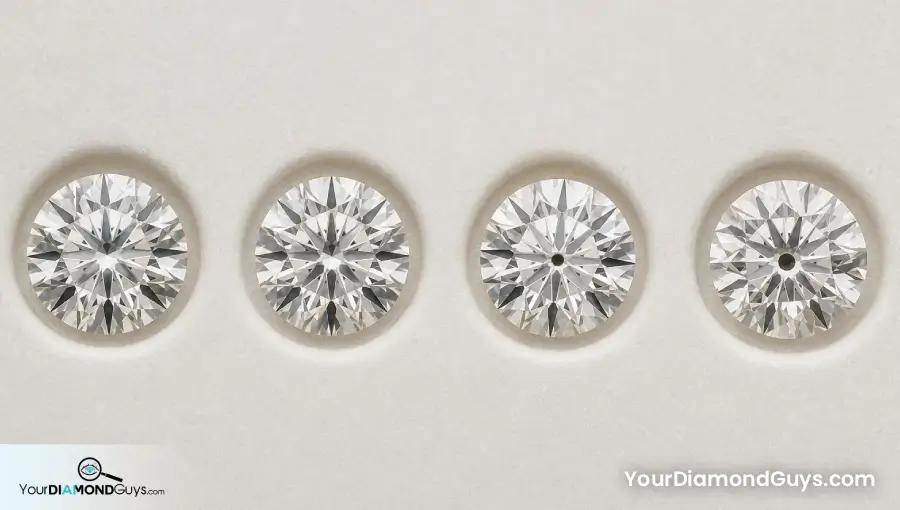
None means there is no culet facet and the pavilion ends in a point. Very Small and Small culets are usually hard to see without magnification. Medium and larger culets can appear as a visible opening or dark point through the table.
For a modern round brilliant, None is the cleanest choice. For an old European or old mine style diamond, a visible culet can be authentic and attractive when the rest of the pattern supports it.
How Culet Descriptions Change The View
GIA compares culet facet width with average girdle diameter. As that facet grows, the opening becomes easier to see through the table.
The center appearance depends on table size, pavilion pattern, and observer distance too. A Medium culet does not look identical in every diamond.
| Culet description | Typical face up effect | Buyer view |
|---|---|---|
| None | Closed center | Preferred for most modern rounds |
| Very Small | Usually not visible without magnification | Rarely a buying issue |
| Small | Subtle center point can appear | Inspect at normal distance |
| Medium | Visible opening or center mark | Style choice or cut warning |
| Slightly Large to Large | Clear open culet | Commoner in antique styles |
| Very Large to Extremely Large | Strong center opening | Must be an intentional look |
Modern Rounds And Antique Cuts Need Different Judgment
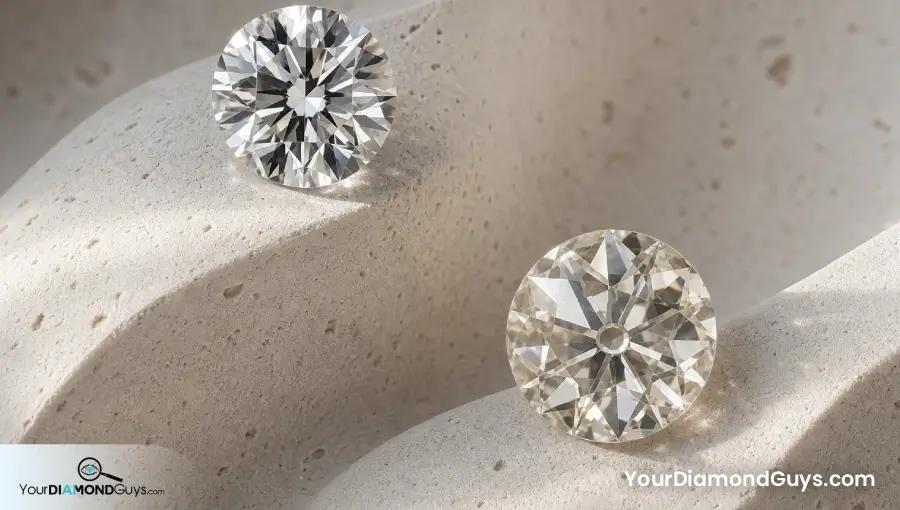
A modern round brilliant aims for a crisp, closed center and an even reflection pattern. A larger culet can interrupt that pattern and can limit the cut grade.
Old mine and old European cuts were designed with different tables, crowns, pavilion facets, and culets. The open center can create the broad, slower flashes collectors want.
Do not force a modern Hearts and Arrows standard onto an antique stone. Do not let antique charm excuse an accidental center problem in a modern one.
Culet Size Can Point To A Bigger Pattern Issue
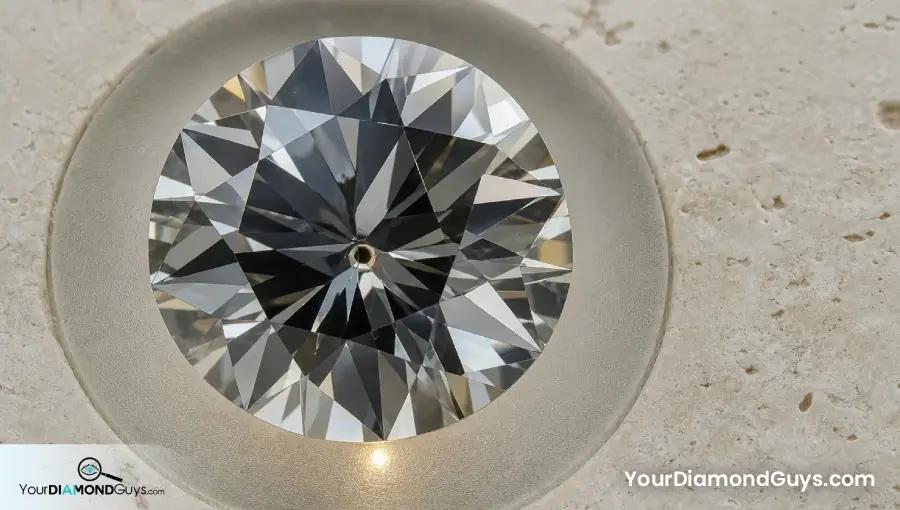
A visible culet draws the eye to the center, but it may not be the real problem. Off center placement, uneven pavilion mains, a distorted outline, or a large window can matter more.
Use the pavilion guide to understand the lower structure. Then watch the center as the diamond rotates. An intentional open culet stays centered and participates in the pattern.
For fancy shapes, a reported culet or pointed tip needs shape context. The outline quality guide helps you check whether the center, point, and axis line up.
What The Report Cannot Show
The verbal description cannot tell you whether you personally notice the culet at normal viewing distance. It cannot tell you whether the open center fits the stone's character.
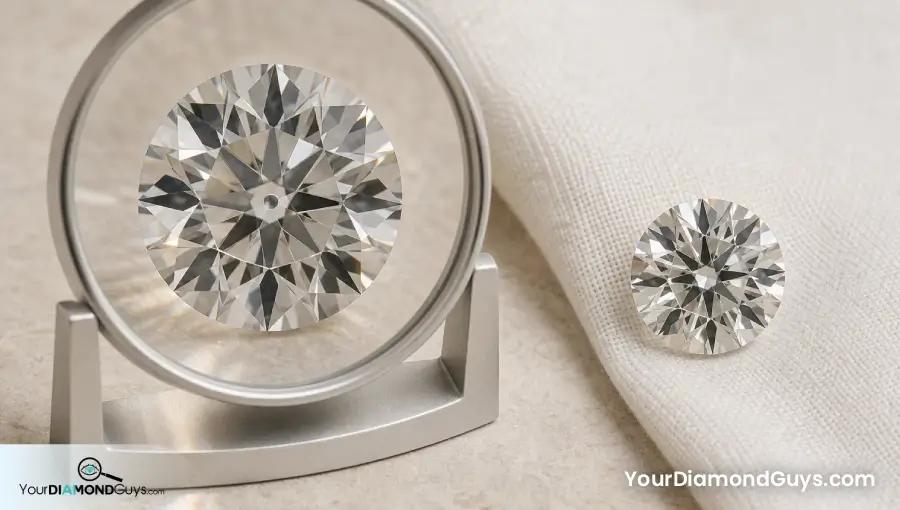
Ask for one straight top image, one magnified rotation, and one normal scale hand view. Those three views prevent a microscope detail from taking over the whole decision.
A culet is a visual attribute. Judge it in the visual hierarchy of the complete diamond.
How I Judge A Culet In Context
For a modern round, I keep None as the default. A Very Small culet does not scare me when the cut proof is excellent and the center looks closed.
For an antique cut, I decide whether the culet is centered, intentional, and proportional to the table and facet style. Character is welcome. Careless cutting is not.
A Modern Versus Antique Culet Example
Modern Round A has a Very Small culet and a clean hearts pattern. Modern Round B has None, but the pavilion pattern is uneven and the center leaks.
Round A wins. The tiny culet is less important than the stronger optical structure. That is why one report word should never outrank the whole stone.
Mistakes I Would Avoid
- Treating None as proof of good cut.
- Rejecting a Very Small culet that disappears at normal distance.
- Buying a large culet in a modern round without checking pattern.
- Calling every open culet damage.
- Ignoring off center placement or uneven pavilion facets.
Questions To Ask Before Buying
- What culet description appears on the GIA report?
- Can I see it without magnification?
- Is the culet centered in the face up pattern?
- Does the stone use a modern or antique cutting style?
- Does the culet enhance the look or distract from it?
Where To Compare The Proof
Affiliate disclosure: Your Diamond Guys can earn a small commission if you buy through a partner link. It does not change what you pay or which diamond we recommend.
Use magnified videos on Blue Nile and Brilliant Earth to compare center appearance across culet descriptions. Then step back to normal scale before deciding whether the detail matters.
The Culet Decision I Would Make
Choose None for the cleanest modern round search. Stay open to Very Small when the center remains closed and the rest of the cut is excellent.
For antique cuts, judge the culet as part of the design. A deliberate open center can be beautiful. An accidental or off center one needs a pass.
If you want another set of eyes on the stone, book your free consultation with Your Diamond Guys.
Keep The Culet In Context
Use the established diamond culet size guide for the broad buying decision. Then check girdle durability, the proportion red flags checklist, and optical precision when a center reflection raises a bigger pattern question.
Return to the diamond proportion relationships guide to judge the culet with pavilion pattern, total depth, girdle, and cutting style.
Discover the Secrets of the Round Brilliant Cut Diamond
Questions? Reach out directly for a free consultation, or drop them in the Diamond Buyers Academy community — Rob and Josh answer personally.
Questions Buyers Ask Us
*Some links on our site may earn us a small commission at NO EXTRA cost to you, helping us keep our content free*