How To Read A Diamond Grading Report
Verify identity first, then evaluate grades and beauty.
By Josh Allen, Co-Founder of YourDiamondGuys.com. Fifth generation diamantaire with 30+ years in the global diamond trade. Former supplier to Tiffany & Co., Cartier, and Harry Winston.
Do not start with color and clarity. Start by proving the report belongs to the diamond.
That sounds obvious. It is not how most buyers shop online. A seller highlights a high color or clean clarity grade, and the buyer assumes everything else on the document is routine.
Inside the trade, we read reports backward from that retail habit. We check the lab first, then verify the report number, check measurements against carat weight, look for proportion red flags, read the comments line, inspect the plot, and only then decide whether the color and clarity grades make the asking price fair.
For a natural diamond, consult GIA’s guide to its Diamond Grading Report for field locations, then use this guide for the trade reading order.
What should you check first on a diamond report?
Check lab, report number, date, origin, shape, measurements, and carat first. Then read cut data, color, clarity, finish, fluorescence, comments, plot, and inscription.
That order separates identity from quality and quality from beauty. The certified diamond guide explains why a grading report is an opinion on standards, not an insurance policy or price guarantee.
How do you confirm the report and listing match?
Open the issuing laboratory’s official lookup page and enter the report number. Do not rely on the seller’s hosted PDF. Compare the archived data with the document and the listing.
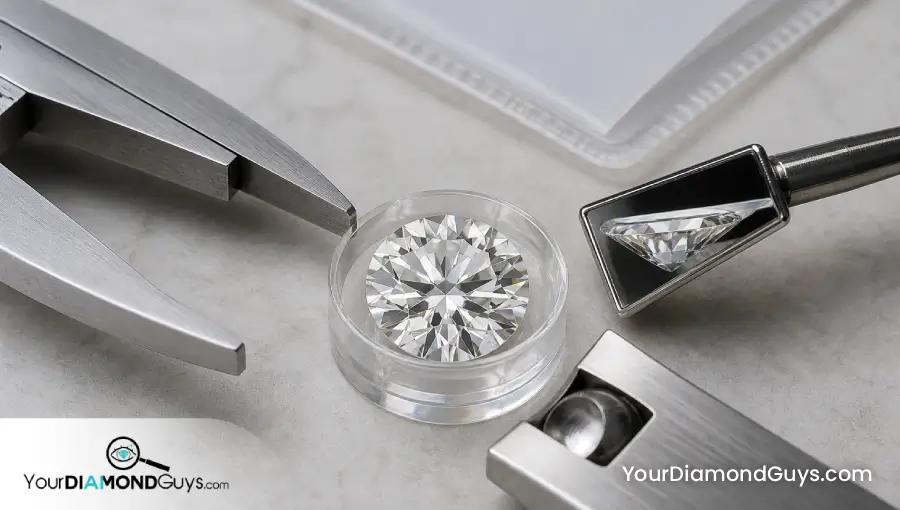
Round diamond aligned with a clear identity collar, diameter jaws, weight cradle, and girdle mirror.
- Confirm the report date is reasonably current or accounts for wear.
- Confirm the shape, cutting style, and measurements match the listing.
- Confirm the carat weight is identical down to the second decimal place.
- Confirm origin disclosure states natural diamond or laboratory grown diamond.
- Check whether a laser inscription is recorded on the report.
If any field differs, stop. The report number verification checklist walks through the exact lookup process before money changes hands.
What do shape, measurements, and carat tell you?
See GIA’s optical measurement equipment in Figure 1 for a look at how a laboratory measures the stone.
Shape and cutting style tell you which rules apply. A round brilliant can carry an overall cut grade. An oval, cushion, emerald cut, or radiant does not receive the same cut grade on most lab reports, which means proportions and measurements do more of the heavy lifting.
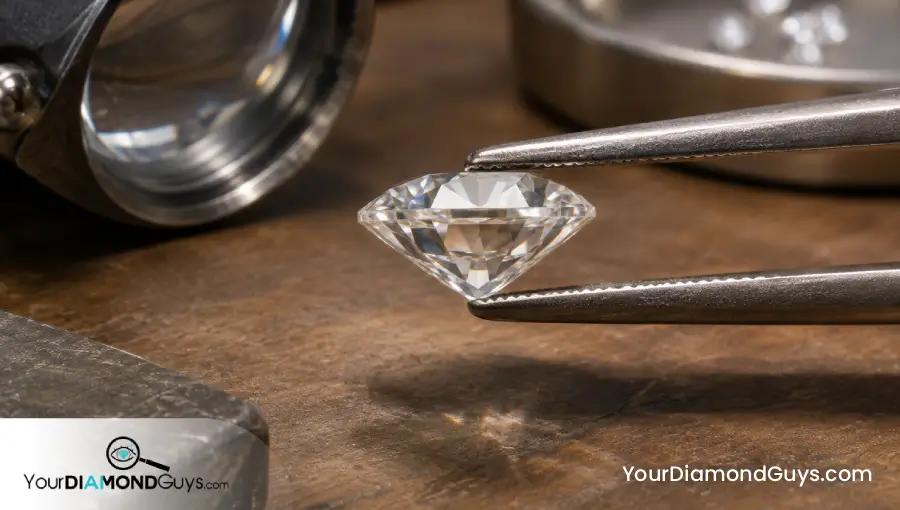
Oval diamond beside a diameter gauge on a white inspection pad.
Carat is weight, not face-up size. A poorly proportioned 1.00 carat round can measure 6.20 millimeters across, while a well-cut 1.00 carat round measures around 6.40 to 6.50 millimeters. The smaller spread means weight is hidden in excess depth.
Measurements also expose outline issues. In fancy shapes, length divided by width gives the ratio. A 1.35 to 1.50 ratio creates a classic oval outline. A ratio below 1.30 looks rounder, while a ratio above 1.55 looks narrow.
Which cut and finish fields matter most?
For a natural round, I want GIA Excellent cut as the first gate, then I narrow the proportions. A useful search zone is table 56 to 58 percent, depth 60 to 62.4 percent, crown angle 34 to 35 degrees, and pavilion angle 40.6 to 41 degrees.
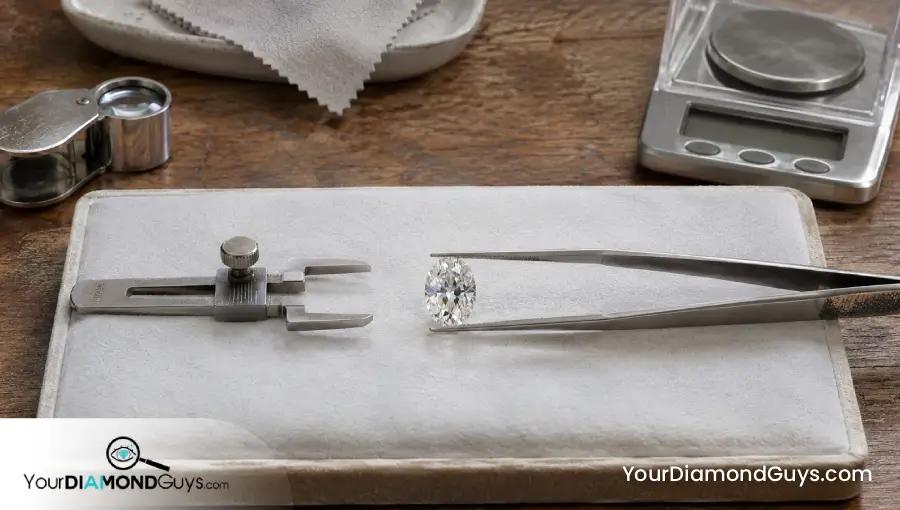
Side view of a round diamond showing its crown and pavilion facets.
Polish and symmetry deserve attention next. In Excellent cut stones, Very Good polish or symmetry is rarely a deal breaker, but Excellent on both finish grades keeps resale and trade standards cleaner.
Fluorescence is not an automatic defect. Faint or medium blue can be harmless or slightly helpful in near-colorless stones. Strong blue can occasionally create a hazy appearance in sunlight, so require video confirmation before paying.
| Field | Fast buyer read | What still needs proof |
|---|---|---|
| Measurements | Visible spread and outline | Face up balance |
| Cut grade | Round cut category | Facet precision and leakage |
| Table and depth | Basic proportion filter | Crown and pavilion pairing |
| Polish and symmetry | Finish quality | Optical symmetry |
| Fluorescence | UV reaction strength | Appearance across lighting |
The cut grade terminology guide compares lab cut scales when reviewing AGS or GCAL reports.
How should you read color and clarity?
Color is a controlled laboratory comparison, not a promise that your eye will see a difference once the diamond is set. Shape, size, metal color, and viewing direction influence what you notice.
Clarity summarizes the effect of inclusions and blemishes at 10 times magnification. It does not promise eye cleanliness. Ask which feature sets the grade and where it sits. An inclusion under the table facet catches light faster than the same inclusion placed near the girdle edge.
In VS2 and SI1 diamonds, review the clarity plot and the actual stone video side by side. A single faint crystal near the prong line is easier to live with than scattered dark pinpoints across the center table.
Why are comments and the plot easy to miss?
The comments line carries facts that do not fit neatly elsewhere. It can disclose treatments, unplotted clarity features, surface graining, extra facets, inscription wording, or the basis of a clarity grade.
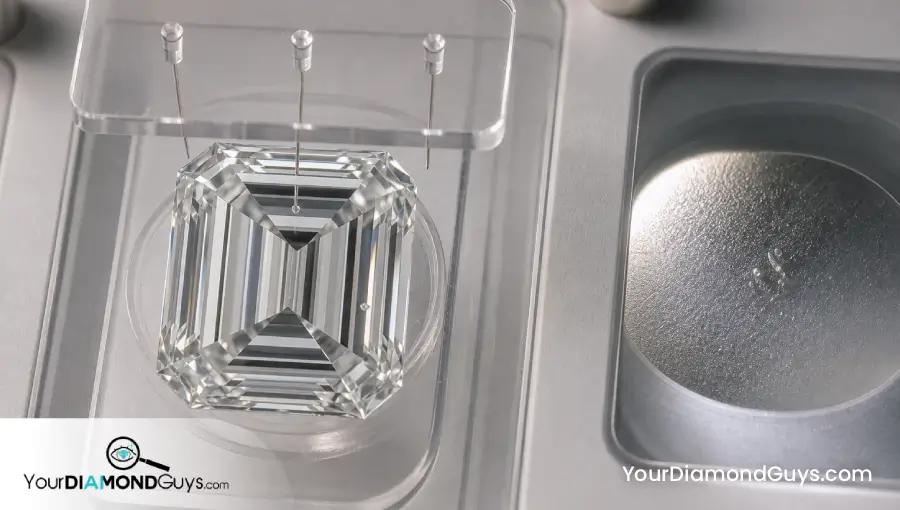
Emerald cut diamond beneath selected clarity locators beside a separate optical view of unplotted surface details.
Phrases like "clarity grade is based on clouds that are not shown" require visual caution. That comment can explain why an SI1 stone looks hazy even though the plot appears clean.
The plot shows internal characteristics in red and external blemishes in green. Key to Symbols lists features in order of importance to the clarity grade. Use the comments section guide and the clarity plot guide to separate harmless disclosures from real risks.
How do you turn report data into a shortlist?
I use three passes. Pass one confirms identity. Pass two filters quality and risk. Pass three compares the actual stones in consistent video.
A report mismatch ends the review. A proportion concern triggers better images. A risky comment triggers a direct question. A clean report with a flat video still loses.
The two minute report review in practice
A 1.20 carat GIA round measures 6.75 by 6.79 by 4.16 millimeters. The report shows G color, VS2 clarity, Excellent cut, 57 percent table, 61.4 percent depth, 34.5 degree crown, 40.8 degree pavilion, Excellent polish and symmetry, and faint fluorescence.
The comments list pinpoints not shown. The plot shows a small crystal near the edge. Nothing looks structurally alarming on paper.
The paper passes. Now ask for video. You check whether the crystal is dark, whether light leaks through the pavilion, and whether the stone looks bright in neutral lighting. The paper earns the inspection; the diamond earns the buy.
Report reading traps that hide expensive problems
- Starting with color and clarity before identity.
- Reading the seller PDF without using the lab lookup.
- Treating carat as visible size.
- Trusting Excellent without reading proportions.
- Ignoring comments because the plot looks clean.
- Assuming a VS grade is automatically eye clean.
The follow up questions the report cannot answer
- Can you confirm the stone matches this report number?
- Can I see the girdle inscription under magnification?
- Which inclusion sets the clarity grade?
- Is the diamond eye clean at normal viewing distance?
- Can I see neutral video with locked exposure?
- What happens if an independent inspection finds an issue?
The fastest safe reading order
Identity first. Risk second. Beauty third. Price last.
That sequence feels slower for about two minutes. Then it saves hours of comparing diamonds that never deserved a place on the list.
Get Your Free GIA Report Analysis
Questions? Reach out directly for a free consultation, or drop them in the Diamond Buyers Academy community — Rob and Josh answer personally.
What do buyers ask about reading diamond reports?
← Browse all diamond grading guides
Want another set of eyes on the diamond?
Send the listing, grading report, price, and any video you have. We can look at the lab report, measurements, video, and price to make sure the evidence supports the price.
*Some links on our site may earn us a small commission at NO EXTRA cost to you, helping us keep our content free*